Understanding why E-E-A-T matters for SEO in 2026 is no longer optional for businesses that want to grow online. Search engines have evolved dramatically, and the rules of ranking have changed. Today, Google rewards brands that demonstrate real Experience, genuine Expertise, earned Authoritativeness, and consistent Trustworthiness — not just keyword-stuffed pages and purchased backlinks.
In 2026, SEO is not only about ranking on Google. It is about building trust with real people. Search engines have become smarter, and users have become more careful. People no longer want to read content that feels robotic, copied, or written only to attract clicks. They want useful information, honest advice, and content that feels like it comes from real experience. That is exactly why E-E-A-T matters for SEO in 2026 more than at any previous point in the history of search.
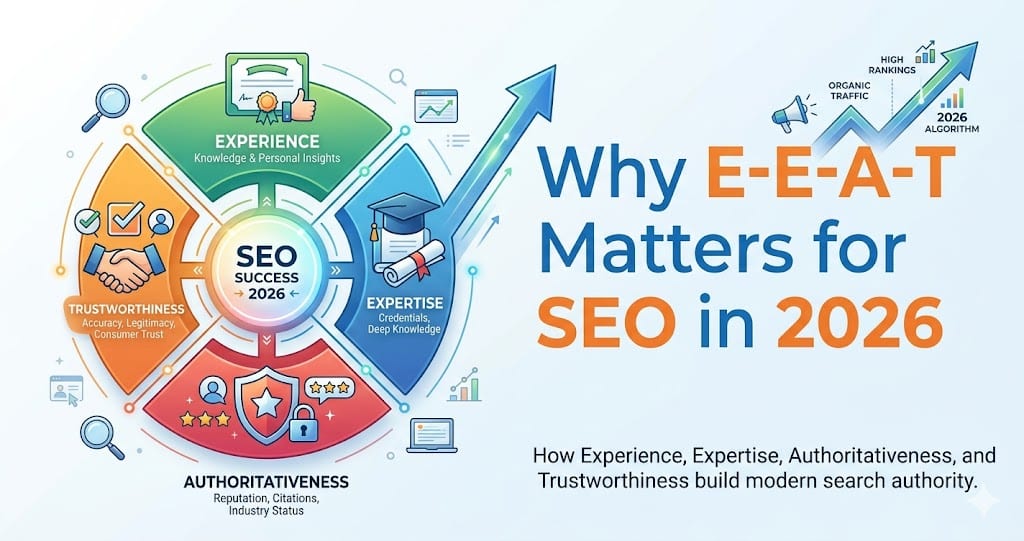
E-E-A-T stands for Experience, Expertise, Authoritativeness, and Trustworthiness. These are not just technical SEO terms anymore. They are the foundation of strong, sustainable online growth. According to Google’s Search Quality Rater Guidelines, businesses that show real knowledge, genuine experience, and clear honesty are the ones that perform better in search and win more long-term trust from their audience.
Why E-E-A-T Matters for SEO in 2026: Experience Makes Content Feel Real
This is one of the biggest changes in modern SEO. In the past, many websites could rank by simply collecting information and rewriting it. But now, Google gives more value to content that shows first-hand experience. The person writing the content should sound like someone who has actually done the work, used the product, or lived through the topic.
For example, if a café owner writes about making better espresso and shares tips from daily work, photos from the café, and lessons learned over time, that content feels much more natural and believable. It feels human. On the other hand, a generic article written with no real-life background may look neat, but it often feels empty — and both users and algorithms can tell the difference.
This is why experience matters so much in 2026. It adds authenticity. It helps readers trust the message. It also tells search engines that the content is not just made for ranking, but is based on something real. Businesses should share real examples, case studies, project stories, behind-the-scenes details, and personal insights whenever possible. That is the kind of content that stands out today. You can also explore our content strategy guide to see how experience-based storytelling fits into a broader SEO plan.
Expertise: Showing You Truly Understand Your Topic
How Deep Knowledge Builds Reader Confidence
Experience is important, but expertise gives your content depth and credibility. Expertise means you truly know the subject and can explain it properly. This does not mean writing in difficult language or trying to sound overly formal. In fact, the best expert content is often the easiest to understand.
In 2026, users appreciate content that solves their problem clearly. If someone visits your website, they want answers they can trust. They want to feel that the person behind the content knows what they are talking about. That is why expert-driven content performs well. It gives detailed answers, explains concepts properly, and avoids vague or confusing information.
According to the Moz guide to E-E-A-T, demonstrating expertise requires consistent publishing, clear author attribution, and genuine depth on each topic covered. A business can show expertise by publishing articles written by team members who know the field well, adding author bios that explain real qualifications, supporting claims with examples and measurable results, and explaining things in a way that is honest and educational rather than promotional.
When readers feel that your business understands the topic deeply, they stay longer, trust more, and remember your brand. That is the real value of expertise in the context of why E-E-A-T matters for SEO in 2026.
Authoritativeness: How Your Online Reputation Grows
Authority is not something you can claim by yourself. It grows when others start recognising your brand as reliable and valuable. In SEO, this happens through mentions, backlinks, citations, local listings, brand references, and community trust.
Think of authority like reputation. If respected websites reference your business, if customers mention you by name, if local directories list you correctly, and if your brand appears in the right places, your authority becomes stronger. Search engines notice those signals and begin to understand that your website is part of a trusted network rather than an isolated page.
For local businesses, this is especially important. A brand mentioned in local publications, business directories, event listings, or community platforms has a better chance of being seen as relevant and trustworthy by both users and search engines. The Ahrefs guide to E-E-A-T outlines practical ways to build authoritative signals, including earning editorial links and maintaining consistent business information across all platforms.
Authority takes time to build, but once it grows, it becomes one of the strongest long-term SEO advantages a business can have.

Why E-E-A-T Matters for SEO in 2026: Trust Is the Foundation
Out of all four parts of E-E-A-T, trustworthiness is the one that holds everything together. This is a central reason why E-E-A-T matters for SEO in 2026 — a website can have knowledge, experience, and visibility, but if it does not feel trustworthy, people will leave. Trust is what makes users feel safe enough to believe you, contact you, buy from you, or recommend you.
In 2026, trust is built through small but important details. Your website should have accurate information. Your contact details should be clear. Your content should avoid false promises. Your site should be secure with HTTPS. Your business should respond professionally to reviews. Your authors should be visible and credible. All of these things send a clear message: this business is real, open, and responsible.
Trustworthiness is also emotional. People can often feel when a brand is trying too hard to sell instead of help. They can tell when content sounds fake or forced. But they also notice honesty. They appreciate clear explanations, realistic claims, and transparent information. That is why trust is not just a ranking factor — it is the heart of online success.
Quick Trust Checklist:
- HTTPS enabled on all pages
- Clear author bios with real credentials
- Accurate and up-to-date contact information
- Professional responses to positive and negative reviews
- No false or exaggerated claims in content or product pages
- Privacy policy and terms of service clearly accessible
People-First Content Is Now More Powerful Than Search-First Content
One of the biggest lessons for SEO in 2026 is this: content should be created for people first. Search engines are now rewarding websites that genuinely help users. This means content should answer real questions, solve real problems, and provide clear value.
In the past, some websites focused too much on keywords. They wrote for algorithms more than for people. As a result, the content often felt unnatural, repetitive, and empty. That kind of writing does not work well anymore. Today, successful content feels useful, easy to follow, and written with care.
People-first content often includes real examples, direct answers, expert input, customer concerns, and practical guidance. It is not written just to fill a page. It is written to help someone understand something better. As Google’s helpful content documentation states, the primary question to ask before publishing is whether the content provides original, helpful information that would genuinely satisfy the reader.
Businesses should ask themselves a simple question before publishing anything: will this genuinely help the reader? If the answer is yes, then the content is moving in the right direction. This human-centered approach is a direct expression of why E-E-A-T matters for SEO in 2026.
Client Reviews and Testimonials Build Trust Faster Than Self-Promotion
One of the strongest trust signals in 2026 is social proof. People trust what other people say about a business much more than what the business says about itself. That is why reviews and testimonials matter so much — they directly reinforce E-E-A-T.
When a potential customer sees positive feedback from real people, it immediately increases confidence. They feel safer. They feel that others have already tried the service or product and had a good experience. This reduces doubt and helps new customers take action.
Reviews also support SEO, especially local SEO. Search engines look at review quality, frequency, and relevance as signals of trust and activity. A business with regular positive feedback appears more reliable than one with no public customer response at all.
But collecting reviews is only one part of the process. Businesses should also respond to them properly. A polite response to positive or negative feedback shows professionalism and care. It shows that the business is active and listening. For guidance on managing your review presence, see our Google Business Profile optimisation guide.
Technical SEO Supports Trust Behind the Scenes
Many people think E-E-A-T is only about writing and branding, but technical SEO also plays a major role. Even the best content can struggle if the website experience is poor. A slow, broken, outdated, or insecure website makes users uncomfortable, and when users are uncomfortable, trust weakens.
That is why technical SEO still matters a great deal in 2026. A website should load quickly, work well on mobile devices, use HTTPS for security, and avoid broken links or confusing navigation. These things may seem small, but together they shape the user’s overall experience — and user experience is now deeply tied to how Google evaluates page quality.
You can identify and fix technical issues for free using Google Search Console. Good technical SEO does not replace E-E-A-T, but it strengthens it by making sure your trust signals are visible and effective. Helpful content needs a reliable, fast, and secure home to perform at its best.
E-E-A-T and Local SEO: Why It Matters More Than Ever for Local Businesses
Building Community Trust Alongside Search Trust
For local businesses, understanding why E-E-A-T matters for SEO in 2026 is especially urgent. People searching locally often want fast answers from businesses they can trust. They want to know who is nearby, who is reliable, and who truly understands their local needs.
This is why local examples, community involvement, accurate business profiles, local reviews, and location-specific content all matter. A business that feels connected to its area has a stronger chance of earning trust from both users and search engines at the same time.
For example, a local service provider can share nearby project examples, mention community participation, highlight local customer success stories, and keep business information consistently updated across all platforms. These details make the business feel real and present — not just a name in a directory.
In 2026, local SEO is not just about location keywords. It is about proving that your business truly belongs in that local space and has earned recognition there. Our complete local SEO strategies guide covers how to apply each pillar of E-E-A-T specifically to local search performance.
Small Improvements Can Make a Big E-E-A-T Difference
The good news about E-E-A-T is that improving it does not always require a large budget. Many powerful changes are simple and practical. A business can update old content, add author names, include real photos, improve contact pages, ask happy customers for reviews, or publish more useful articles based on real experience.
These may seem like small steps, but together they create a much stronger online presence. Over time, they show users and search engines that the business is active, genuine, and serious about quality.
Practical E-E-A-T improvements to start today:
- Update old content to reflect current experience and expertise
- Add visible author names and bios to every article
- Include real photos from your business, team, or projects
- Improve your About and Contact pages with clear, honest information
- Request reviews from satisfied customers on a consistent basis
- Publish useful articles rooted in real, first-hand experience
- Ensure business information is consistent across all directories and listings
- Add internal links connecting related content across your website
In 2026, the websites that grow steadily are often not the ones using the most tricks. They are the ones doing the basics honestly and consistently. That is what creates long-term trust — and long-term rankings.
Conclusion: Why E-E-A-T Matters for SEO in 2026
SEO in 2026 is becoming more human. Search engines are no longer impressed by content that only looks optimised. They want content that feels real, helpful, and trustworthy. That is exactly why E-E-A-T matters for SEO in 2026 — and why every business that wants to compete online must take it seriously.
Experience shows that your content comes from real life. Expertise shows that you know your topic. Authoritativeness shows that others recognise your value. Trustworthiness shows that people feel safe with your brand. When these four work together, they create a strong foundation for long-term SEO success.
Start with one improvement today — update an author bio, respond to a pending review, or publish one experience-based article. Small steps, done consistently, build the kind of digital presence that both users and search engines reward.
Related reading: