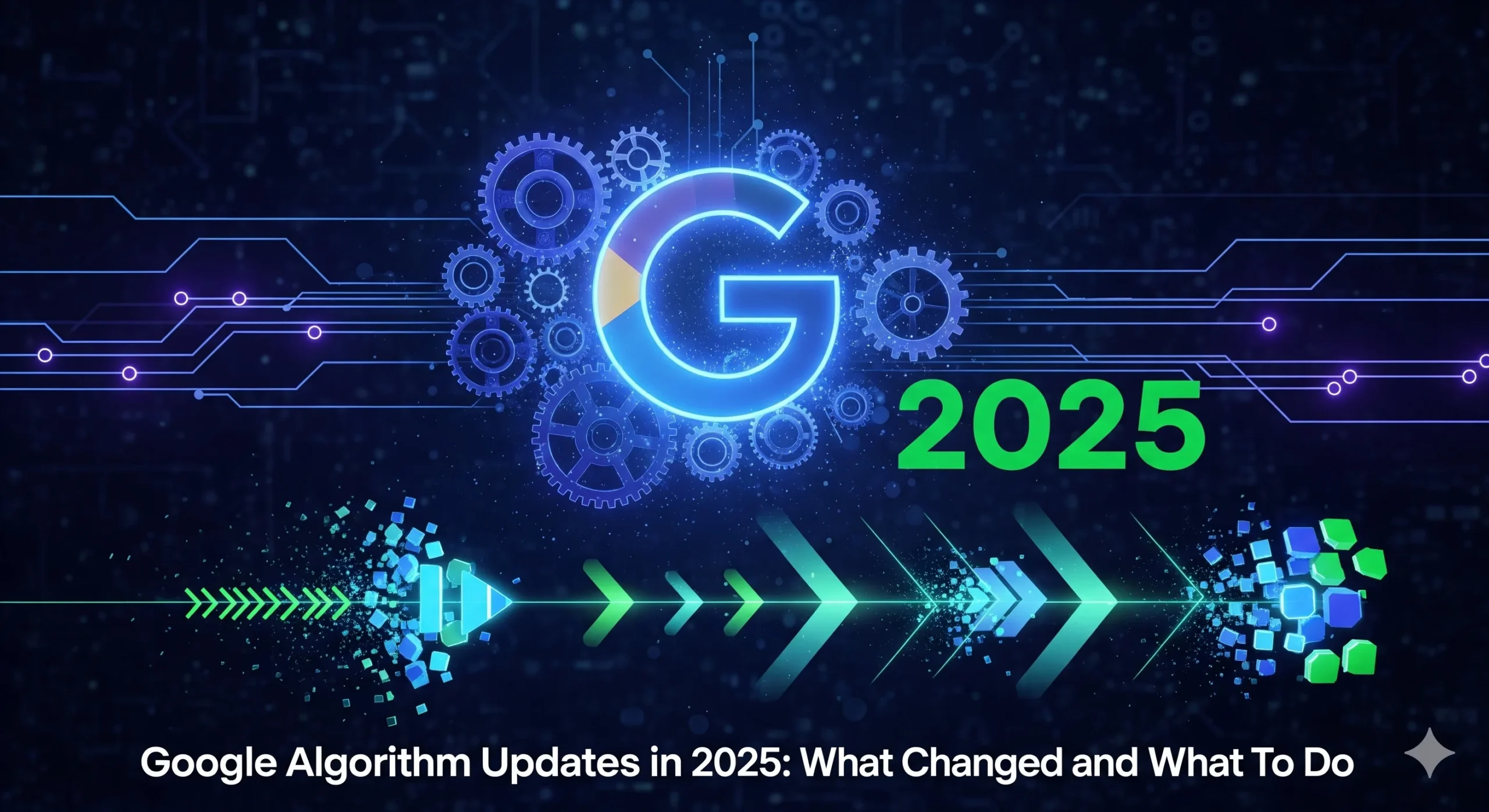
Search Engine Optimization (SEO) has always been a moving target, and 2025 is no exception. Google has once again rolled out several significant algorithm updates designed to improve user experience, prioritize authentic content, and combat spammy SEO tactics.
For SEO professionals, website owners, content creators, and digital marketers, staying ahead of these changes is critical. If your traffic has dipped recently or you’re struggling to maintain rankings, this article will help you understand what’s changed and how to adapt your SEO strategy to succeed in 2025.
1. Overview of Google Algorithm Updates in 2025
Google continues to refine its algorithms with the same core goal: providing the most relevant, helpful, and trustworthy search results. However, 2025’s updates introduced major shifts in how websites are ranked:
Key 2025 Updates
- Helpful Content Update 3.0 → Google now prioritizes people-first content more aggressively, rewarding genuinely informative articles and penalizing AI-generated or thin content.
- AI-Driven Search Evolution → Google’s Gemini-powered AI integrates directly into SERPs, creating personalized answer summaries and pushing organic results further down the page.
- SpamBrain 5.0 Update → Crackdown on spammy link-building, keyword stuffing, and PBNs (Private Blog Networks).
- Core Web Vitals 2025 Enhancements → UX metrics like speed, interactivity, and visual stability carry more weight than ever.
The Shift Towards Authenticity
Google has doubled down on authentic, experience-driven content. Websites that demonstrate expertise and trustworthiness are seeing better rankings, while low-value pages and clickbait are being deprioritized.
Recent Google Updates (June & August 2025)
a) June 2025 Core Update (June 30 – July 17)
- Scope: Global rollout across all languages and regions.
- Focus: Broad relevance and content quality.
- Winners: YouTube, Wikipedia, independent niche sites with strong author credibility.
- Losers: Large e-commerce platforms like Amazon, eBay, Target, BestBuy; YMYL-sensitive sites such as betterup.com and patient.info.
- Impact: Some sites recovered from past algorithm penalties; others experienced ranking volatility.
Action Steps:
- Audit high-priority pages for content depth and freshness.
- Enhance E-E-A-T (Experience, Expertise, Authoritativeness, Trustworthiness).
- Avoid quick fixes—focus on long-term value creation.
b) August 2025 Spam Update (Launched August 26)
- Powered by: SpamBrain, Google’s AI-driven anti-spam system.
- Scope: Global, all languages.
- Focus: Crackdown on link spam, keyword stuffing, hidden text, and other spam violations.
- Impact: Immediate drops for sites violating spam guidelines; recovery depends on compliance.
- Duration: Rolling out over several weeks.
Action Steps:
- Monitor Google Search Console for ranking changes.
- Audit backlinks and remove spammy links.
- Ensure content complies with Google’s spam policies.
- Strengthen E-E-A-T and provide first-hand, authentic experiences.
2. Key Changes in Google’s Ranking Factors
Google’s algorithm in 2025 is smarter, stricter, and more user-focused than ever. Let’s break down the four major ranking factor shifts:
a) AI-Powered Search Enhancements
- Google’s Gemini AI powers real-time, contextual answers directly in search results.
- SEO now requires optimizing for AI-driven summaries, not just traditional blue links.
- Structured, concise, and semantically rich content performs best.
b) User Intent & Search Personalization
- Google now predicts user intent with higher precision.
- Content must be laser-focused on solving problems rather than chasing generic keywords.
- Personalization means two users can see different SERPs for the same query — highlighting the importance of understanding your audience deeply.
c) Core Web Vitals 2025 Update
Page experience metrics now have more influence on rankings:
- Page Load Speed: Target <1.8 seconds for better rankings.
- Interaction to Next Paint (INP): Replaced FID, measuring responsiveness.
- Cumulative Layout Shift (CLS): Stable, clutter-free design is essential.
Poor Core Web Vitals now directly affect discoverability, especially on mobile devices.
d) E-E-A-T Signals Boosted
Google’s focus on Experience, Expertise, Authoritativeness, and Trustworthiness (E-E-A-T) has intensified.
To improve E-E-A-T:
- Showcase author bios with credentials.
- Use first-hand experiences in your content.
- Build a strong backlink profile from credible sources.
3. Impact on Different Types of Websites
Not all websites are affected equally. Here’s how 2025’s updates influence different niches:
a) Blogs & Publishers
- Content originality is king.
- AI-generated, duplicate, or thin content faces penalties.
- Long-form, in-depth guides outperform shallow posts.
b) E-commerce Sites
- Product pages must include authentic reviews, FAQs, and rich schema.
- Google prioritizes product experience signals — real-world insights, images, and videos.
- Trust badges, transparent shipping policies, and verified reviews improve conversion-driven rankings.
c) Local Businesses
- Local intent optimization is crucial for visibility in the local pack.
- Factors to prioritize:
- Accurate NAP (Name, Address, Phone Number)
- Google Business Profile optimization
- Positive, authentic local reviews
- Voice search optimization is now more relevant for local SEO than ever.
4. What To Do: SEO Strategies for 2025
Adapting your SEO approach to the 2025 algorithm changes requires proactive strategies:
a) Update Existing Content
- Audit underperforming pages quarterly.
- Add fresh statistics, visuals, and FAQs.
- Ensure content answers user intent better than competitors.
b) Optimize for AI Search
- Create structured content using FAQs, tables, and bullet points.
- Leverage schema markup to help AI-generated answers pull from your site.
- Write concise summaries within articles — AI prefers short, clear responses.
c) Focus on Topical Authority
- Build content clusters around primary topics.
- Interlink related posts to signal depth of expertise.
- Example: A fitness blog might create an authority cluster on “weight loss” linking workouts, diet plans, supplements, and FAQs.
d) Enhance E-E-A-T
- Highlight credentials and author expertise.
- Cite authoritative sources to back claims.
- Secure high-quality backlinks from reputable sites.
e) Boost Page Experience
- Improve Core Web Vitals scores via:
- Image optimization
- Lazy loading
- Mobile-first responsive design
- Ensure intuitive navigation and clean UI/UX.
f) Leverage Structured Data & Schema
- Add schema for:
- Articles
- FAQs
- Products
- Reviews
- Enhances your chances of featured snippets and rich results.
5. How to Recover if Rankings Dropped
If your website saw a traffic dip post-update, here’s how to recover:
- Check Google Search Console:
- Identify affected pages and queries.
- Audit Content Quality:
- Remove thin or outdated content.
- Improve Backlink Quality:
- Disavow spammy links and secure authoritative mentions.
- Fix Technical SEO Issues:
- Address broken links, indexing errors, and duplicate content.
- Rebuild Topical Authority:
- Publish in-depth, problem-solving guides on your niche.
6. Future-Proofing Your SEO Strategy
a) Prioritize People-First Content
Write for users first and algorithms second. High-value, problem-solving content will always rank.
b) Stay Updated with Google Guidelines
Bookmark Google Search Central to follow updates in real-time.
c) Invest in Long-Term Authority
- Build trust and credibility through expert-driven, evergreen content.
- Consistently deliver value rather than chasing short-term hacks.
Conclusion
Google Algorithm Updates 2025 have shifted the SEO landscape towards AI-driven personalization, authentic content, and exceptional user experience.
If you want to protect your rankings and stay ahead of competitors, focus on:
- Building topical authority
- Improving E-E-A-T signals
- Optimizing Core Web Vitals
- Writing people-first, problem-solving content
Struggling to adapt?
At Bemanc Digital, we specialize in helping businesses future-proof their SEO strategies. Contact us today for an in-depth SEO audit and personalized action plan.